
How to Practice Typing in 10 Different Languages Online: A Complete Guide
Learn how to practice typing in multiple languages online. From Bangla and Hindi to Arabic and Spanish, discover the best methods to become a multilingual typing expert.
Last updated: May 16, 2026
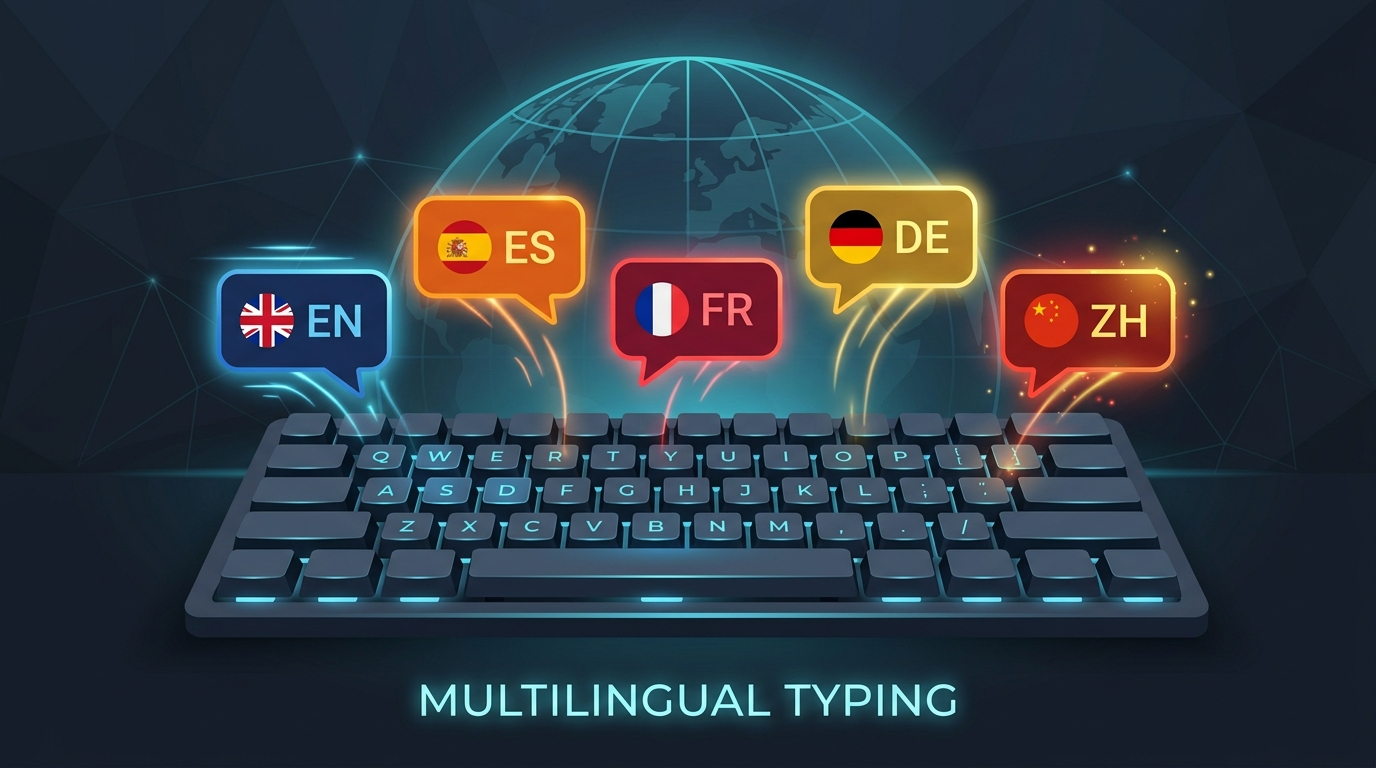
Practicing typing in different languages is an excellent way to expand your typing skills and maintain fluency across multiple writing systems. Whether you are a bilingual professional, a language learner, or someone who types in multiple languages for work, targeted practice in each language produces better results than general typing practice alone.
Why Practice Typing in Multiple Languages?
Multilingual typing is increasingly important in our connected world. Professionals who work with international teams, translators, language learners, and content creators serving global audiences all benefit from being able to type efficiently in multiple languages. Additionally, practicing in different scripts and keyboard layouts builds overall finger dexterity and adaptability that transfers back to improved typing in your primary language.
Understanding Different Writing Systems
Languages use different writing systems that affect how typing feels and functions. Latin-based languages such as Spanish, French, German, and Indonesian use the same basic keyboard layout with added diacritical marks. Abugida-based languages such as Hindi, Bangla, Gujarati, and Tamil use character combinations where each symbol represents a syllable. Arabic, Persian, and Urdu use an abjad system written from right to left with characters that change shape based on position. CJK languages such as Chinese, Japanese, and Korean use entirely different input methods ranging from phonetic typing to character composition.
Tips for Each Major Language Group
For Latin-based languages, the keyboard layout is nearly identical to English with additional accented characters. The key is learning the correct finger positions for accented letters. For Hindi and other Devanagari script languages, take our free online typing test in Hindi to practice combining consonants with vowel signs to form conjunct characters. The keyboard layout maps each press to a specific character or half-form. For Arabic and Urdu, the right-to-left typing direction takes adjustment. The keyboard layout is phonetic for Arabic letters. Practice with short phrases first before moving to full sentences. For Japanese, the most common input method is romaji, where you type the romanized pronunciation and the system converts to kana or kanji. Practice the romanization patterns for speed.
Using CheetahType for Multi-Language Typing Practice
CheetahType supports typing tests in 98+ languages, making it one of the most accessible platforms for multilingual typing practice. Each language page includes educational content about the writing system, keyboard layout notes, cultural context, and common words in that language. The platform also provides language-specific typing text that uses vocabulary and sentence structures appropriate to each language. This makes CheetahType particularly useful for learners who want to practice typing in a new language while also improving their language skills.
Building a Multi-Language Practice Routine
If you practice in multiple languages, structure your sessions to avoid confusion. Dedicate specific days to specific languages. Start each session with a warm-up in your primary language, then switch to the target language. Track your speed and accuracy separately for each language, as progress in one language does not automatically transfer to others. Be patient with yourself when switching languages, especially between different writing systems. It is normal for your speed to be significantly lower in secondary languages, particularly those with different scripts. To understand where your speed currently stands, refer to our average typing speed statistics by age and profession.
Conclusion
Practicing typing in multiple languages is a rewarding skill that opens up professional and personal opportunities. The key principles are the same as for single-language practice: consistency, accuracy focus, and targeted work on weak areas. With platforms like CheetahType supporting 98+ languages with detailed educational content, multilingual typing practice is more accessible than ever.